
What a returned parcel really costs
With cash on delivery, a parcel that comes back leaves more than a hole in revenue. You paid for preparation, outbound delivery, very often the return, and sometimes tied up stock for days. All for zero dinars collected.
A worked example with made-up values, for illustration: you ship 100 parcels, 70 are delivered and 30 come back. If each parcel costs 600 DZD outbound and 300 DZD to return, the 30 returns represent 27,000 DZD in fees with no sale attached — before counting the product, packaging and your agents’ time. Gaining even five points of delivery rate changes the month’s equation.
The good news: returns have identifiable causes, and each has its remedy.
Where returns come from
- Fake and duplicate orders: pranks, test entries, invented numbers, a double click on the form.
- Late or missing confirmation: call the customer three days later and they have bought elsewhere or changed their mind.
- Incomplete delivery details: wrong wilaya or commune, vague address, a number that does not answer.
- The parcel that stalls: stuck at the carrier, a delivery attempt without a call, a customer who does not know a parcel is coming.
- Customer regret: the impulse order nobody called back to reassure.
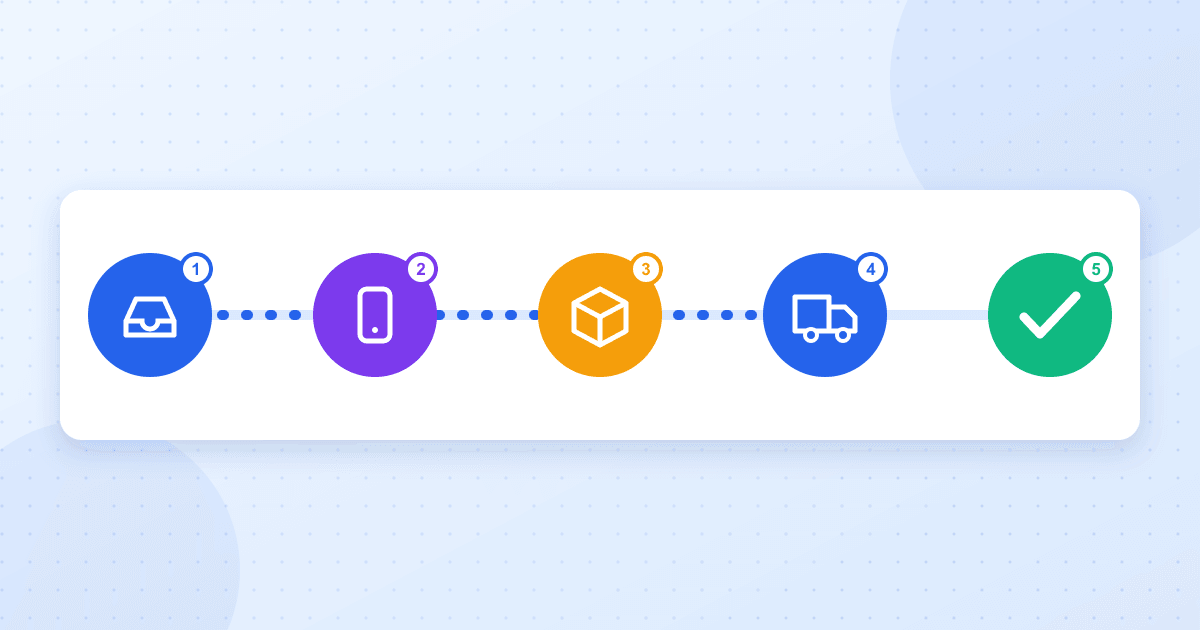
Hence a four-layer protocol: each layer stops part of these causes, and none replaces the others.
Layer 1: protect the front door
Better not to let in an order that is going nowhere.
- A protected order form: on Ecomly sales pages, safeguards turn away automated submissions and too-fast submissions, and an anti-duplicate window blocks the same person re-sending the same order.
- Blacklist: a number identified as a problem is flagged in one action, and its next orders are spotted.
- Customer history: the Customers page groups orders by phone number with delivered, returned and cancelled counts and a rank (new, silver, gold, at risk). Before shipping to a customer who already has three returns, you know.
These checks are not infallible: they cut the noise, which leaves your agents more time for the next layer.
Layer 2: confirm fast, and with method
Confirmation speed weighs heavily: the sooner you call back, the better the customer remembers the order. But method matters as much as speed.
- A clear queue: in confirmation mode, orders scroll one by one with a timer, and three statuses are enough — Confirmed, Call back, Cancelled.
- “Call back” is a real status: an unreachable customer is neither confirmed nor cancelled. They stay visible in the queue until you decide.
- Fair distribution: spreading new orders between agents stops a batch being forgotten in an absent person’s list.
- A short script: confirm the product, the total including delivery, the address, and that the parcel is paid on receipt.
The agent dashboard shows each person’s pending orders — useful to see who is overloaded.
Layer 3: clean up the address before shipping
A successful confirmation can still fail at the door if the address is vague. Before sending to the carrier, Ecomly checks the essential fields — name, phone, wilaya, commune, address, product, price, and the pickup office for stop-desk delivery — and shows you what to fix rather than letting the carrier refuse the parcel.
Wilayas and communes are aligned with the chosen carrier’s lists, which avoids parcels created with an unknown commune. Numbers are normalised, and a second number can be added when the first does not answer.
Layer 4: track the parcel, not just ship it
The last third of returns is decided after shipping. That is the job of the follow-up centre: it reads the statuses carriers report back and flags what needs a hand — a parcel motionless for several days, a “customer unreachable” status, a confirmed order never shipped.
Each line is ranked by urgency and value, with the number of calls already made. The agent calls the customer, notes the outcome or postpones the callback; the order no longer gets lost in the mass.
So the customer knows a parcel is coming, turn on automatic WhatsApp messages (approved templates, through the official API) and Telegram alerts for your team.
Measure before you fix
An overall return rate hides huge gaps. Ecomly’s statistics break the delivery rate (delivered ÷ delivered + returned) down by product, wilaya, commune, agent, carrier and order source. In a few minutes you see, for instance, that one source brings many orders but few deliveries, or that a carrier fails in one region.
Then fix where the loss is concentrated: change carrier on one wilaya, reinforce confirmation on one source, drop a fragile product. See also how to compare your carriers using your own numbers, and the full life cycle of an order.